Hybrid AI Models for Adaptive Water Infrastructure: GNN and PINN Integration with SCADA Signals
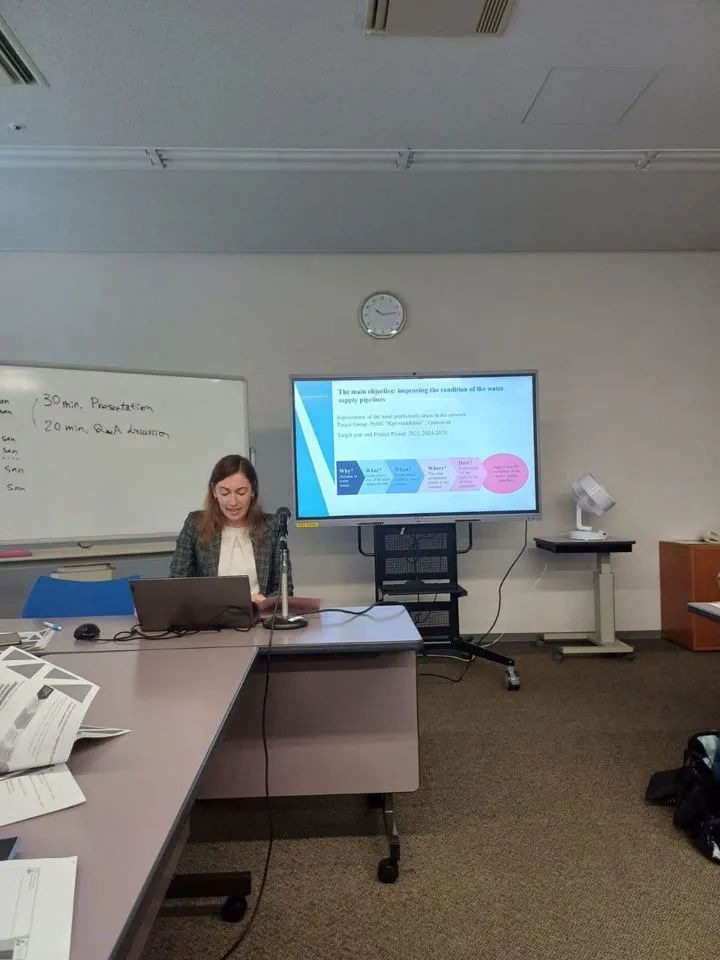 Image credit: Walkerton Network Simulation – Adaptive Optimization Scenario
Abstract
This paper introduces a novel hybrid AI framework combining Graph Neural Networks (GNN) and Physics-Informed Neural Networks (PINNs) to enhance monitoring and control in urban water supply systems. By integrating real-time SCADA signals and topological features of EPANET-modeled networks, the method achieves efficient leak detection, pressure anomaly forecasting, and explainability. A case study on the Walkerton water network demonstrates improvements in prediction accuracy and optimization of valve placement strategies using evolutionary search (NSGA-II).
Type
Publication
In International Conference on AI for Infrastructure Resilience (ICAIRI 2025)
Click the Cite button above to export the BibTeX and add this to your reference manager or Zotero.
These slides provide an overview of the SCADA-integrated PINN-GNN architecture for water supply optimization.
The proposed approach demonstrates how hybrid neural architectures can be applied to real-world water infrastructure challenges. By combining graph topologies with physical modeling constraints and real-time sensor feedback, the framework bridges data-driven and physics-based modeling.
It supports operational decisions such as:
- Dynamic leak localization
- Adaptive pressure control
- Placement of smart valves and sensors
- Predictive failure analysis
Future work includes deployment of the system in collaboration with water utilities across Europe within the Horizon Europe framework.